Maintaining a healthy blood pressure (BP) is important in preventing cardiovascular events such as heart attack and stroke, and measuring BP is a key step in cardiovascular risk assessment. However, it is not always measured correctly. Readings should be taken from both arms and the higher reading of the two, if there is a difference, should be used and a record should be kept of the preferred arm for future readings. But what about the patient’s position? Does a lying and standing measurement need to be done in all patients? What is an ‘acceptable’ difference? And does it matter?
Making sense of HDL cholesterol in cardiovascular risk
Lowering LDL cholesterol (LDL-C) with statins for the prevention of cardiovascular disease (CVD) has rightly become a core activity for primary care health professionals. However, despite effective lowering of LDL-C, many patients still suffer cardiovascular events. Experts have called this ‘the residual risk’ and have speculated whether further cardiovascular events can be prevented by attention to other lipoprotein fractions, particularly HDL cholesterol (HDL-C).
Helping patients with diabetes to win the battle to control their weight
Many people with type 2 diabetes are overweight or obese at diagnosis and continue to struggle to control their weight. This article looks at why people with diabetes find weight control more of a challenge than the rest of us and how practice nurses can help patients to remain positive, particularly when starting insulin to optimise blood glucose control.
What factors influence what we choose to eat and how can we improve choices?
Obesity is, quite literally, the big health problem of the 21st century, with rapidly increasing rates in both adults and children. In this article we explore why obesity is such a challenge and the role of primary healthcare professionals in addressing the problem. We try to unravel the wide range of factors that cause obesity before focusing on why people eat what they do and how we can help patients to review their eating habits, introduce changes to eat more healthily and then sustain those changes.
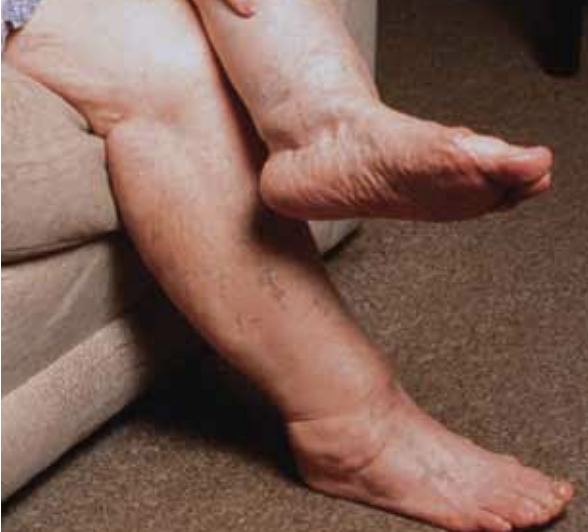
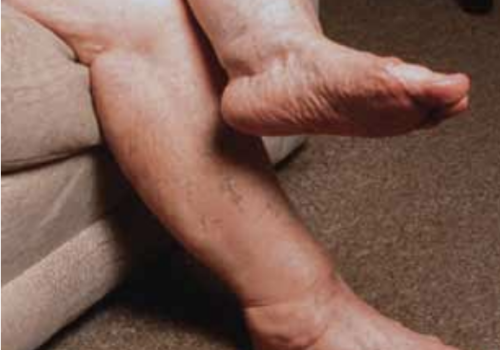
Swollen ankles: preventing, detecting and managing oedema
It is Friday afternoon and, checking your screen, you see your last free appointment has been given to a patient you have seen in the past for routine blood tests. This time when she enters the room you observe that her legs are covered with what looks like kitchen roll, and she is wearing supermarket carrier bags over her feet to protect her shoes. For many of us, this is a ‘heart sink’ patient – with heavy, wet and oedematous legs that are difficult to manage. To be able to manage this type of condition we first need to understand the possible causes of oedema, to identify patients who may be at risk for developing the problem, and to be aware when early intervention could be of benefit.
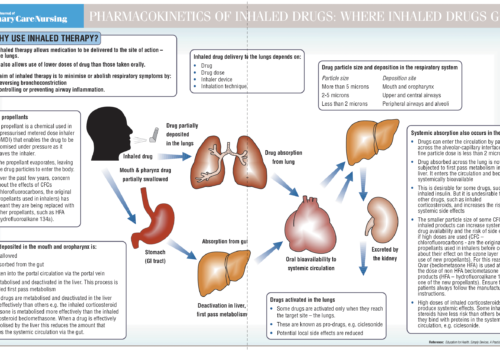
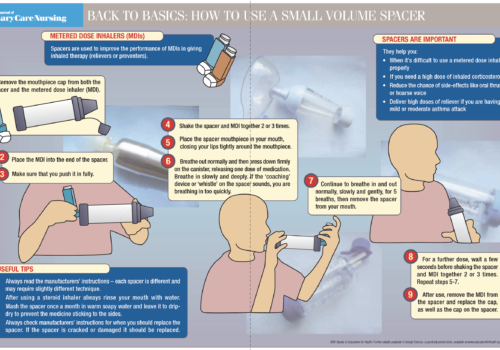
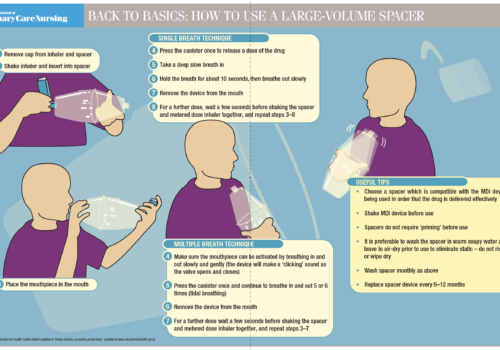
Back to Basics: How do dry powder inhalers (DPIs) work?
The role of Beta2 agonists in managing asthma
Beta agonists are the only class of drugs that is recommended for the management of
asthma at every level of current guidelines, including those from the British Thoracic
Society (BTS). This means that they are used across the spectrum of severity of
asthma, from mild intermittent disease (step one) to severe asthma symptoms (step
five). In this article, we take you through the key things that you – and your patients – need to
know about these drugs.
Rhinitis: Successful Diagnosis and Management
Runny, blocked noses are a common problem in the winter months, accounting for a
substantial number of general practice consultations. Successful treatment depends
on identifying the correct cause of the symptoms. In this article we give you key
information on rhinitis – what it is, how to diagnose it and how to treat it successfully.
Is Immunotherapy an Option for my Patients with Severe Seasonal Allergic Rhinitis?
Severe seasonal allergic rhinitis (hayfever) has a significant impact on sufferers’ quality of life
and productivity, and can be a challenging condition to manage in primary care. As a majority
of these patients have poor or only partial symptom control in primary care, they may be
suitable for referral to secondary care. Some of these patients may be appropriate for
treatment with specific allergen immunotherapy and this article reviews the impact of severe seasonal
allergic rhinitis and highlights recent data on the effectiveness of sublingual immunotherapy.
Editorial: London Marathon
Bless you for your support and best wishes for my fifth London Marathon that took place in
late April. My chosen charities this year (Arrhythmia Alliance, www.arrhythmiaalliance.org.uk
and Stars, http://stars.org.uk) are special for me as I have had a pacemaker for ten years. It
was a surprise to be informed that I would have a new box fitted just three weeks before the
Marathon. However those of you who know me would know that would not stop my attempt!
But there are times when even I have to admit defeat! After completing over half the course in
two hours, I decided to let my heart rule my head for once and bail out gracefully before I
collapsed from heat exhaustion! When I was overtaken by a large carrot I knew it was going
to be a real struggle!
A quick guide to interstitial lung disease
Interstitial lung disease (ILD) is a general term for a number of diseases characterised by
progressive pulmonary fibrosis or ‘scarring’ of the lungs. The term fibrosis implies formation
of abnormal connective tissue within the lung parenchyma. These diseases are less
commonly seen in primary care than airways diseases such as asthma and COPD. However,
like COPD, they produce progressive debilitating breathlessness for the patient. It is important
that practice nurses, particularly those with an interest in respiratory diseases, are aware of this
group of diseases and their management as early referral to specialist care is important.