Acute exacerbations of chronic obstructive pulmonary disease (COPD) are common and
have serious implications. They greatly reduce patients’ quality of life and often result
in hospital admissions. Acute exacerbations of COPD are the largest single cause of
emergency respiratory admissions and each exacerbation results in an average hospital
stay of 10.3 days. In this article we review what causes exacerbations in patients with COPD and
how you can help to prevent and treat them effectively.
Piecing Together the Clues: Diagnosing Asthma in Adults and Older Children
Accurate diagnosis is the fundamental principle underlying effective management of
any condition. Without a correct diagnosis it is not possible to recommend
appropriate treatments, provide relevant educational information or to establish
effective collaborative partnerships between health professionals and patients. In
this article, we provide a ‘how to’ guide to diagnosing asthma. Like a detective, you have to
piece together the clues – including history, lung function and response to treatment – to solve
the diagnosis.
P-values: what are they?
P-values are commonly included in the results sections of randomised controlled trials (RCTs), but what is a p-value and
how should it be interpreted?
Oxygen Therapy for COPD: How to use it Safely
Oxygen therapy for patients with chronic obstructive pulmonary disease (COPD) has
recently been hitting the headlines, because major changes in its supply – using
independent contractors – introduced last year initially caused problems in some areas.
In this article, we review why some patients with COPD need oxygen therapy, when it
should be used and how to use it safely.
Oral Allergy Syndrome
Did you know…. that a large number of your hayfever patients may have a
condition known as oral allergy syndrome? In this article we explore what
causes oral allergy syndrome, why it occurs, the symptoms that patients may
suffer and how to manage the problem.
Optimising nutrition in COPD
Although principally an inflammatory respiratory disease, chronic obstructive pulmonary
disease (COPD) is now recognised as a complex disorder that also manifests in
extrapulmonary and systemic effects. Nutritional manifestations of the disease, notably
weight loss and obesity, have been recognised. However, the complexity of nutritional
problems in COPD has been poorly understood, and the consequences largely underrated. Now,
linked to increasing knowledge regarding systemic inflammation, it is becoming clear that poor
nutritional status is not only a manifestation of COPD but also a predictor of mortality and
healthcare utilisation.
Occupational asthma: how to help the wheezy workers
Approximately one in every ten cases of adult-onset asthma is attributable to
occupational exposure. Unless occupation is considered, a diagnosis of occupational
asthma will be missed so it is likely to be underdiagnosed. An average practice with
around 6,000 patients will typically have approximately 600 adult patients with asthma,
of whom 60 may have occupational asthma if we assume 10% of cases are related to
occupational exposure. Can you think of 60 patients with occupational asthma in your practice?
Non-respiratory causes of breathlessness
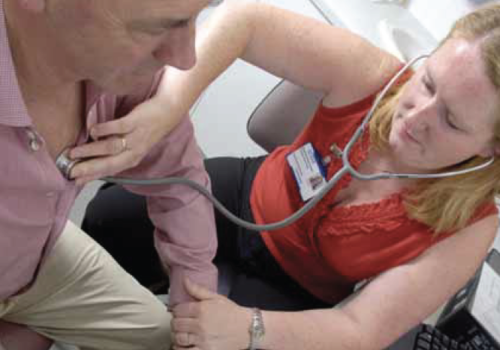
Abnormal breathlessness is a common symptom with a wide variety of causes and it can
be quite a challenge to diagnose the cause and plan appropriate treatment. Practice
nurses are often the first point of contact for patients with these conditions and play an
important role as part of the multidisciplinary healthcare team. This article completes a
series of three on causes of breathlessness (‘The breathless patient: is it asthma or COPD?’ Vol 2,
Issue 1, December 2007 and ‘Respiratory causes of breathlessness.’ Vol 2, Issue 2, March 2008).
Multimedia Tools to help Smokers who want to Quit
This year there is more reason than ever for people to stop smoking, with the ban on
smoking in public places coming into force in July. How can we support smokers
who want to quit? In this article, we provide a comprehensive guide to resources
that can help.
Managing pleural effusions in primary care
Patients with recurrent pleural effusions have, to date, mainly been cared for in hospital.
Many have had to undergo repeated hospital admissions, extended hospitalisation,
discomfort and time away from home. This is particularly the case in patients with
recurrent malignant pleural effusion (MPE). However, new technologies mean that these
patients may be managed by close co-operation between primary and secondary care. This
article describes some exciting developments in the management of pleural effusions in a PCT.
Making the most of self-management plans in COPD
The Department of Health’s Expert Patient Programme recognises the role of selfmanagement
in many different disease areas and its report Self Care recommends the
concept of encouraging people with long-term conditions to self-manage where
possible. Diabetes management would never succeed without the active participation of
the person with the condition and asthma management plans have been advocated for some
time for people with asthma. What can self-management plans achieve in chronic obstructive
pulmonary disease (COPD)?
Making Sense of Drug Allergy: What Goes Wrong and Why
Allergic or other immunological mechanisms are thought to account for 6-20% of
all adverse drug reactions, but in most cases the mechanism is unclear. This
article provides an in-depth review of drug allergy – adverse drug reactions with
a known immunological mechanism or with clinical features that mimic an
immunological reaction.