At last, the updated NICE (National Institute for Health and Clinical Excellence) guideline for the management of type 2 diabetes has been published. It includes an update on the management of blood glucose, blood pressure, lipids, renal function and retinopathy, but the key priorities for implementation are based on taking a patient-centred approach to care. In this article, we will focus on the important areas of patient education, dietary assessment, setting targets for HbA1c, self-monitoring and starting insulin therapy.
Making Sense of FINDRISC: the Finnish Diabetes Risk Score and How to Use it
In this article, we look at what FINDRISC is and how this tool can be used to effectively prevent and slow down the development of diabetes. We also discuss the correlation between blood glucose and cardiovascular risk before a diagnosis of diabetes has been made, and how to manage risk factors to significantly reduce morbidity and mortality.
Starting on a Gliptin – Sitagliptin or Vildagliptin
Heart Failure Specialist Nurses: Feeling the Impact
Heart Failure Specialist Nurses (HFSNs) now work in the community alongside their general practice colleagues. They can act as a valuable resource to support the primary care team in the management of heart failure patients. They carry out home visits and run community clinics to stabilise patients after discharge from hospital following an acute event. The aim is to educate patients and their family carers how to manage living with heart failure, up-titrate medications to optimal levels, stabilise the patient and then hand them back to the care of the primary care team, knowing that they will be referred back to the HFSN should their condition deteriorate. However, some complex patients with advanced heart failure (NYHA III or IV) and at high risk of re-hospitalisation are retained in the specialist nurse caseload.
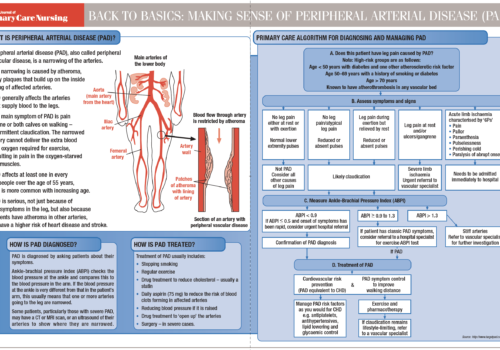
Back to Basics: Making sense of peripheral arterial disease (PAD)
The penis as a barometer of cardiovascular risk
The arteries that supply the penis are very small and may be more prone to atherosclerosis than larger vessels. This means that the penis may be the first area in a man’s body to suffer from a reduction in blood flow and so signal cardiovascular disease.
A case of severe aortic stenosis
Cardiovascular risk management series: 2 – Using guidelines as a framework for cardiovascular risk management
Reducing the impact of vascular disease: the proposed Vascular Risk Programme for risk assessment and management
Measurement of baseline total cholesterol: new data from The Health Improvement Network (THIN) database
Ambulatory ECG monitoring in primary care
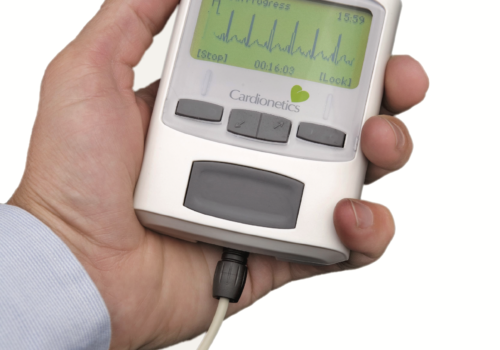
Cardiac arrhythmia affects more than 700,000 people in England and is consistently in the top ten reasons for hospital admission, consuming significant accident and emergency time and bed days.1 In the general population, arrhythmias are normally quite minor, silent, and typically benign. Symptoms may affect the patient enough to be both disruptive and distressful. In […]