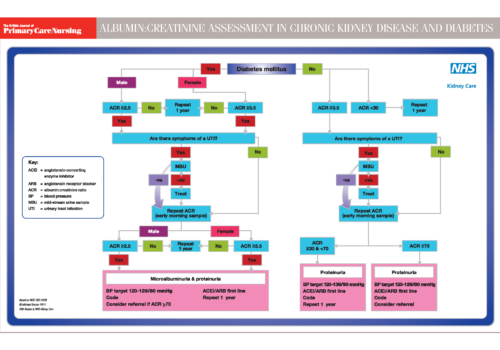
ALBUMIN:CREATININE ASSESSMENT IN CHRONIC KIDNEY DISEASE AND DIABETES

Making Best Practice, Every Day Practice
ALBUMIN:CREATININE ASSESSMENT IN CHRONIC KIDNEY DISEASE AND DIABETES
Richard Bright was ahead of his time in recognising the importance of being able to diagnose renal disease. Chronic kidney disease (CKD) patients can be at similar levels of cardiovascular risk to those patients who have previously had a heart attack.
In March 2012, the Department of Health created the first National Clinical Director post dedicated to stroke care. Whilst the post is an interim one, pending final decisions about the nature of clinical input to the NHS Commissioning Board from 1st April 2013, its creation emphasises the commitment of the government to continue the implementation of the National Stroke Strategy, in the context of a major emphasis on joining up cardiovascular care.
Many drugs are cleared from the body by the kidneys, so careful medicines management is especially important in people with chronic kidney disease (CKD). This article explains how to ensure CKD patients receive recommended therapies designed to protect their kidneys and reduce their risk of a heart attack or stroke.
People with advanced kidney disease are required to make many choices about their treatment throughout the journey of this disease. Opting not to have dialysis or to withdraw from treatment is a difficult decision and there are many factors that influence patients’ decisions. For those who choose not to have dialysis, the implications need to be understood by the patient, their family and carers and healthcare professionals involved in their care. This article provides an update on this important issue to equip primary care professionals with a clear understanding of end-of-life care for patients with advanced kidney disease.
Chronic kidney disease (CKD) is a multifaceted disease that has several associated complications. Anaemia is one of the most common complications that can develop early in the course of the disease process. It is associated with increased mortality,increased hospitalisation rates, and reduced quality of life. Lower levels of kidney function are associated with lower haemoglobin (Hb) levels and a higher prevalence and severity of anaemia.
Over the past five years there have been dramatic changes to the way in which people with chronic kidney disease (CKD) are being managed in primary care. As a result of policy changes there are now many more people with CKD being identified, especially those with stage 3A. This article deals with one of the most important issues for healthcare professionals when caring for people with early CKD – how to tell people that they have the condition and how to best manage it.
Chronic kidney disease (CKD) has a high mortality rate once it reaches the most severe stage. However, complications can be reduced and even prevented if it is diagnosed and treated earlier. Many people who develop CKD become symptomatic only when the disease is well established. By that point, the opportunity for some of the interventions aimed at minimising the impact of the disease has passed. Nurses working in general practice are well placed to recognise people at risk for CKD, diagnose them early and ensure that treatment is initiated and optimised to protect their renal and cardiovascular health.
Diet and lifestyle strategies are essential in the treatment and possibly in the prevention of chronic kidney disease (CKD). Dietary modification plays a fundamental role in helping to control increased levels of blood electrolytes and metabolic waste productsthat are often seen as renal function declines. Dietary and lifestyle modification may not directly influence disease progression in CKD, but several lifestyle factors have been highlighted as important due to the significant influence they exert over associated factors such as diabetes and hypertension, which are two of the leading causes of CKD, and obesity.
















A unique new e-platform for primary care

By continuing to this site you are confirming that you are a healthcare professional and are opting into the use of cookies.