Many people with type 2 diabetes are overweight or obese at diagnosis and continue to struggle to control their weight. This article looks at why people with diabetes find weight control more of a challenge than the rest of us and how practice nurses can help patients to remain positive, particularly when starting insulin to optimise blood glucose control.
What factors influence what we choose to eat and how can we improve choices?
Obesity is, quite literally, the big health problem of the 21st century, with rapidly increasing rates in both adults and children. In this article we explore why obesity is such a challenge and the role of primary healthcare professionals in addressing the problem. We try to unravel the wide range of factors that cause obesity before focusing on why people eat what they do and how we can help patients to review their eating habits, introduce changes to eat more healthily and then sustain those changes.
Swollen ankles: preventing, detecting and managing oedema
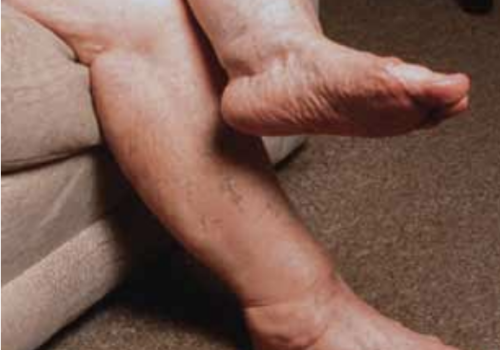
It is Friday afternoon and, checking your screen, you see your last free appointment has been given to a patient you have seen in the past for routine blood tests. This time when she enters the room you observe that her legs are covered with what looks like kitchen roll, and she is wearing supermarket carrier bags over her feet to protect her shoes. For many of us, this is a ‘heart sink’ patient – with heavy, wet and oedematous legs that are difficult to manage. To be able to manage this type of condition we first need to understand the possible causes of oedema, to identify patients who may be at risk for developing the problem, and to be aware when early intervention could be of benefit.
What is the evidence for statins in the secondary prevention of stroke?
The Stroke Association estimates that about 150,000 people suffer a stroke in the UK each year. Stroke is the third commonest cause of death in developed countries and the leading cause of disability. So can we reduce this burden? In this article, we look at the evidence for statins in the secondary prevention of stroke.
Back to Basics: Urine tests for renal function
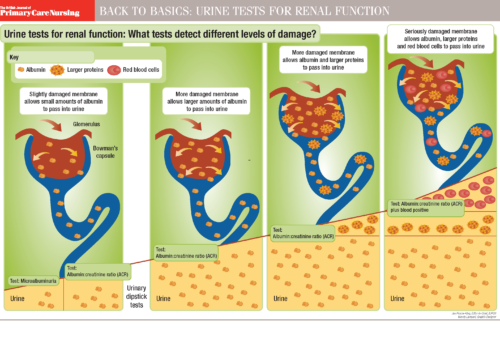
Urine tests for renal function: What tests detect different levels of damage?
Venous thrombosis and thromboembolism
Venous thromboembolism (VTE), comprising deep vein thrombosis (DVT) and pulmonary embolism (PE), is a major public health problem affecting around 100 per 100,000 population per year and causing thousands of deaths annually. Large population-based studies have shown that factors associated with hospitalisation account for half of the attributable risk of VTE.
When to use aspirin in CVD prevention: acting on the latest evidence
The Use of Pulse Oximetry in Primary Care
Pulse oximetry is now in common use in all healthcare settings. Until recently regarded as a secondary care device, the pulse oximeter is now routinely used in primary care, both in the general practice surgery and in the community. It can be useful in initial assessment, ongoing monitoring, and in both acute and chronic clinical situations. This article examines the how, when, what and why of pulse oximetry.
Scoring Top Marks for Asthma QOF Indicators

Asthma is a chronic disease that has, for a long time, been the domain of primary care nurses, and many have qualifications enabling them to run nurse-led asthma clinics. It is, therefore, essential to fully understand the Quality and Outcomes Framework (QOF) and to be able to maximise the points available to the practice, at the same time as providing a comprehensive service to patients. In this article, we review the QOF indicators for asthma, strategies for optimising record keeping and performing asthma reviews.
Research Made Easy
Reducing Hayfever Havoc: Keeping Symptoms at Bay
Hayfever affects around one in ten adults, and an even higher proportion of children and teenagers. Chronic symptoms may lead to poor concentration, impaired learning ability and school absenteeism in children, amongst other problems. In the run-up to the hayfever season, therefore, it is important to identify teenagers or young adults with persistent or severe hayfever symptoms and to treat their symptoms aggressively to prevent poor performance at school and in examinations. Given that approximately 80% of patients with asthma also have rhinitis, asking your asthma patients about their possible hayfever symptoms is a good starting point.
Lung Cancer: Diagnosis and Therapy

There are over 37,000 new cases of lung cancer each year in the UK and it is the most common cancer in males and second most common after breast cancer in females. The role of the multidisciplinary team is essential in the management of these patients and it is important for all members of the team to know the signs to look for and actions to take in cases of suspected lung cancer. This article reviews the current methods of diagnosis and treatments available for lung cancer and the role of the primary healthcare professional.