



This resource is fully searchable using the search box at the top of the page, or to narrow down your selection using filters click on 'Knowledge hub' in the main navigation.
Here you will find:

More than 500 articles especially written by colleagues to support your care of patients with the cardiovascular diseases commonly seen in primary care.
Articles on the diagnosis and treatment of patients with cardiovascular conditions such as:
…and more.
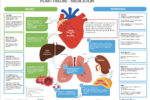
Simple and informative infographics which will answer questions such as “How do these drugs work?”, “What causes this heart condition?” and much more.
Sometimes I shock myself with what I do not know. But one of the fantastic things about working as a practice nurse is that there are so many chances to find out something new. We can all learn things from simply talking to patients. When I was starting out, it bothered me (‘the professional’) when a patient knew more than I did. But the patients were so nice—I think they felt sorry for me— that I soon stopped feeling overwhelmed and became interested.
Sometimes I feel like a nephron. These hard-working filters keep on working regardless of the pressure of blood flowing into the kidney. In just the same way, practice nurses must stay at the job no matter how many patients stream through the doors of the surgery. What is more, just as the kidney compensates when it loses nephrons, practice nurses take on more work to make sure that patients do not suffer when staffing levels fall.

Approximately 5% of adults aged over 40 years have stable angina, appear on our coronary heart disease (CHD) registers and are recalled at least annually for reviews. People with angina are often prescribed four or more regular items, and it is widely believed that patients are more likely to take their medicines effectively when they agree to their prescription and feel involved in decision-making. The medication review involves patients in prescribing decisions, and supports them in taking their medicines most effectively, so improving health outcomes and satisfaction with their care.
We undertook a survey to discover whether primary care health professionals felt willing and sufficiently skilled to commission cardiovascular services, and what their support needs might be. Although clinicians were confident in their clinical and communication skills, the vast majority of respondents felt unsure of their skills and knowledge to commission cardiovascular care and believed they would need specialist advice to help them. There was a strong desire for training, a feeling of exclusion and a plea for nurses to be involved.
We describe a patient with heart failure, diagnosed from clinical history and examination, and with a raised BNP. Despite treatment, her symptoms progressed. Echocardiography, performed after a six-month delay, showed a large mass. After excision of the mass, an atrial myxoma, the patient recovered rapidly and well.

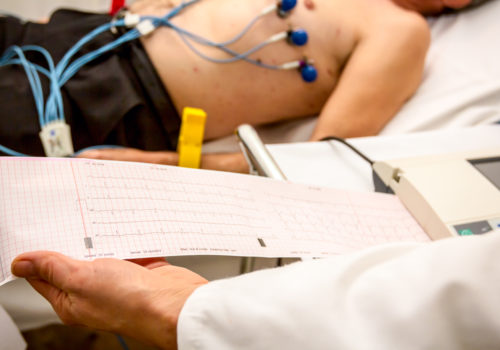
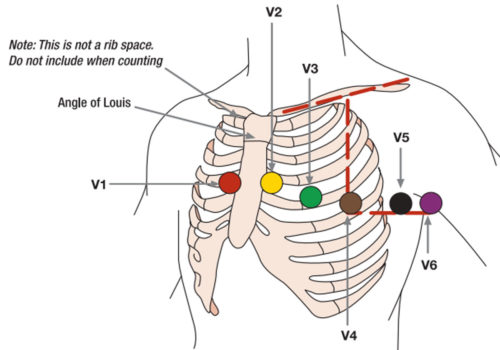
The ECG is the most commonly performed cardiac investigation but incorrectly recorded ECGs may lead to misdiagnosis. In this study, questionnaires were used to assess the pre-training perceived and actual knowledge of correct ECG recording technique among 54 primary care staff. Training was then performed and, after training, many staff admitted that their previous practice had been incorrect some or all of the time and said that they would change their practice.
55 years; targeting those at high Framingham CVD risk; and tailoring dose according to risk stratification. By combining price and potency data with our CVD patient risks database, we modelled potential benefit (myocardial infarctions [MIs] prevented), cost and numbers expected to be treated for each strategy.

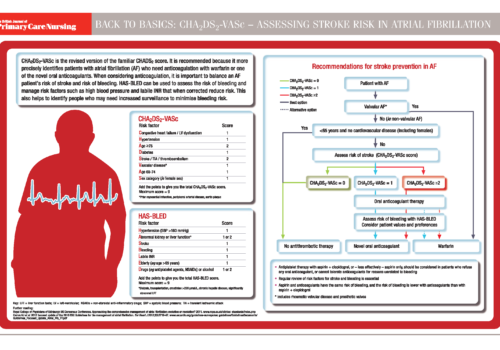
A practical guide for primary care. If we wanted to make things simple, all patients with atrial fibrillation (AF) would receive an oral anticoagulant to reduce their risk of stroke and other comorbidities. But historically this has been difficult because anticoagulants can cause bleeding. Decisions about oral anticoagulation in patients with AF are therefore complex, […]
Cardiovascular disease (CVD) risk assessment is a central part of the strategy for identification and treatment of high-risk cases, as was recognised in the National Institute for Health and Clinical Excellence (NICE) guidelines on lipid modification. A national strategy devised by the Department of Health for screening all individuals aged between 40 and 75 years exists in the UK though implementation and uptake have been variable. Unfortunately, in screening programmes the greatest uptake tends to be among the white population, wealthier people and women rather than among those groups in which CVD is over-represented: men, poor individuals and those from ethnic minorities. This has posed a great challenge to risk screening but non-traditional approaches including those in places of worship, pharmacies and communally-led initiatives seem to lead to greater success.
The study found a significant prevalence of sub-clinical atrial fibrillation (AF) within the community. AF confers a five-fold risk of stroke, and the risk of death is doubled in AF-related stroke.
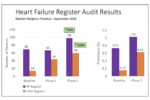
We hypothesised that practice heart failure registers may not be complete or robust due to patients not always being allocated the correct READ codes. We set up a project which improved practice heart failure registers. Ensuring practices have robust registers, by improving clinical coding in general practice, means more accurate prevalence levels can inform planning and commissioning of heart failure services.
A unique new e-platform for primary care
For healthcare professionals in countries with applicable health authority product registrations. The content may not be approved for use in your specific region or country. Please review the applicable product labelling for your country for indications and instructions prior to use. If not approved, please exit this site.
We use cookies to ensure that we give you the best experience on our website.
By continuing to this site you are confirming that you are a healthcare professional and are opting into the use of cookies.