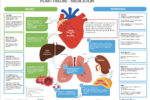
A really useful reference for your practice, this handy Back to Basics tells you all you need to know about heart failure treatments.

Making Best Practice, Every Day Practice

This resource is fully searchable using the search box at the top of the page, or to narrow down your selection using filters click on 'Knowledge hub' in the main navigation.

Here you will find:

 More than 500 articles especially written by colleagues to support your care of patients with the cardiovascular diseases commonly seen in primary care.
Articles on the diagnosis and treatment of patients with cardiovascular conditions such as:
…and more.
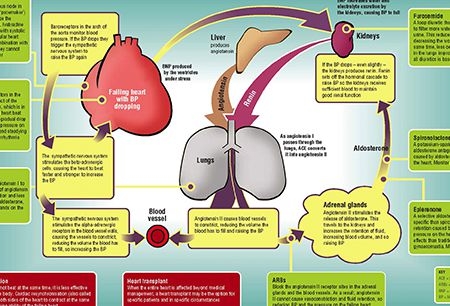
Simple and informative infographics which will answer questions such as “How do these drugs work?”, “What causes this heart condition?” and much more.
A really useful reference for your practice, this handy Back to Basics tells you all you need to know about heart failure treatments.
Chronic heart failure (CHF) continues to be a leading cause of death and readmission to hospital in the UK. Since the availability of specialist CHF services is variable, many patients rely on practice nurses to review their care. The National Institute for Health and Care Excellence (NICE) guidelines have proved very helpful, but are now a cause for confusion as new evidence changes the management of heart failure.
Atrial fibrillation (AF) is the commonest cardiac arrhythmia seen in primary care and, if left untreated, is a significant risk factor for stroke. New guidelines from the National Institute for Health and Care Excellence (NICE) include some practice-changing recommendations on diagnosing AF, the role of aspirin and the novel oral anticoagulants (NOACs), and shared decision-making to ensure patient-centred care.
A recent study concluded that in general practices providing NHS Health Checks, the change in reported prevalence of diabetes, hypertension, coronary heart disease (CHD) and chronic kidney disease (CKD) does not differ from practices that provide usual care. Although the study was not randomised and was not powered to support this conclusion, it is of interest because it raises a number of important questions about the delivery of the NHS Health Check.
A retrospective audit of premature deaths (aged under 75) from cardiovascular disease (CVD) in Leeds showed that patients diagnosed with CVD and placed on disease registers lived on average eight years longer than patients who had not been diagnosed prior to their deaths. If innovations like the NHS Health Check can be used to identify CVD patients in a more equitable manner, there is likely to be a major impact in reducing premature mortality with the potential to reduce health inequalities for disadvantaged groups in the population.
Most people with coronary heart disease (CHD) can be managed with lifestyle change and optimal medical therapy, but some patients need revascularisation procedures such as angioplasty with stenting (percutaneous coronary intervention [PCI]). These patients spend minimal time in hospital, and GPs have an increasingly important role in follow-up to minimise the risk of adverse events, promote lifestyle change and ensure continuing adherence to medication.
Patient satisfaction with treatment is a key component of the successful management of chronic conditions such as atrial fibrillation (AF). In the EUropean Patient Survey in Atrial Fibrillation (EUPS-AF) survey, UK patients reported the highest rates of satisfaction with their healthcare system and quality of care. However, only about half of UK patients reported receiving regular anticoagulation testing and about one third had never or rarely had a medication review. This survey provides important insights into the current provision of care that should be taken into account when designing and commissioning patient-centred AF services.
Warfarin is highly effective in preventing strokes in people with atrial fibrillation (AF), but has its limitations. Only half of patients who could benefit actually receive warfarin, resulting in an estimated 7000 avoidable strokes each year.
I was listening to the radio the other morning as the news was breaking that polyunsaturated fats seem to be no better for your heart than good old butter. My friend Mike Knapton from the British Heart Foundation was interviewed and in his radio clip he said: “Choose something for taste and texture!” Now I would bet my life savings, if I had any, that he was edited, and that he would have gone on to advise moderation in all things and that it is important to reduce the amount of fat in the diet.
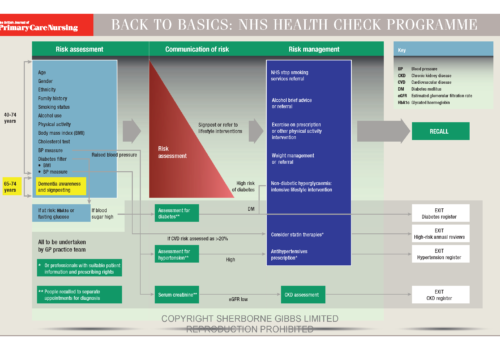
The NHS Health Check offers 15 million people aged 40-74 years in England an assessment of cardiovascular risk, together with preventive interventions, once every five years. The programme has aroused some controversy, but there is an urgent need to take action now to reduce preventable, premature death and disability caused by vascular disease.
A patient may present at any time suffering from the signs and symptoms of anaphylaxis, (a severe, life-threatening, generalised or systemic hypersensitivity reaction). This article explains how to recognise anaphylaxis and how to treat anaphylactic shock. It also outlines the responsibilities of practice nurses and other members of the primary healthcare team after a patient has had a suspected anaphylactic reaction.















A unique new e-platform for primary care

By continuing to this site you are confirming that you are a healthcare professional and are opting into the use of cookies.